
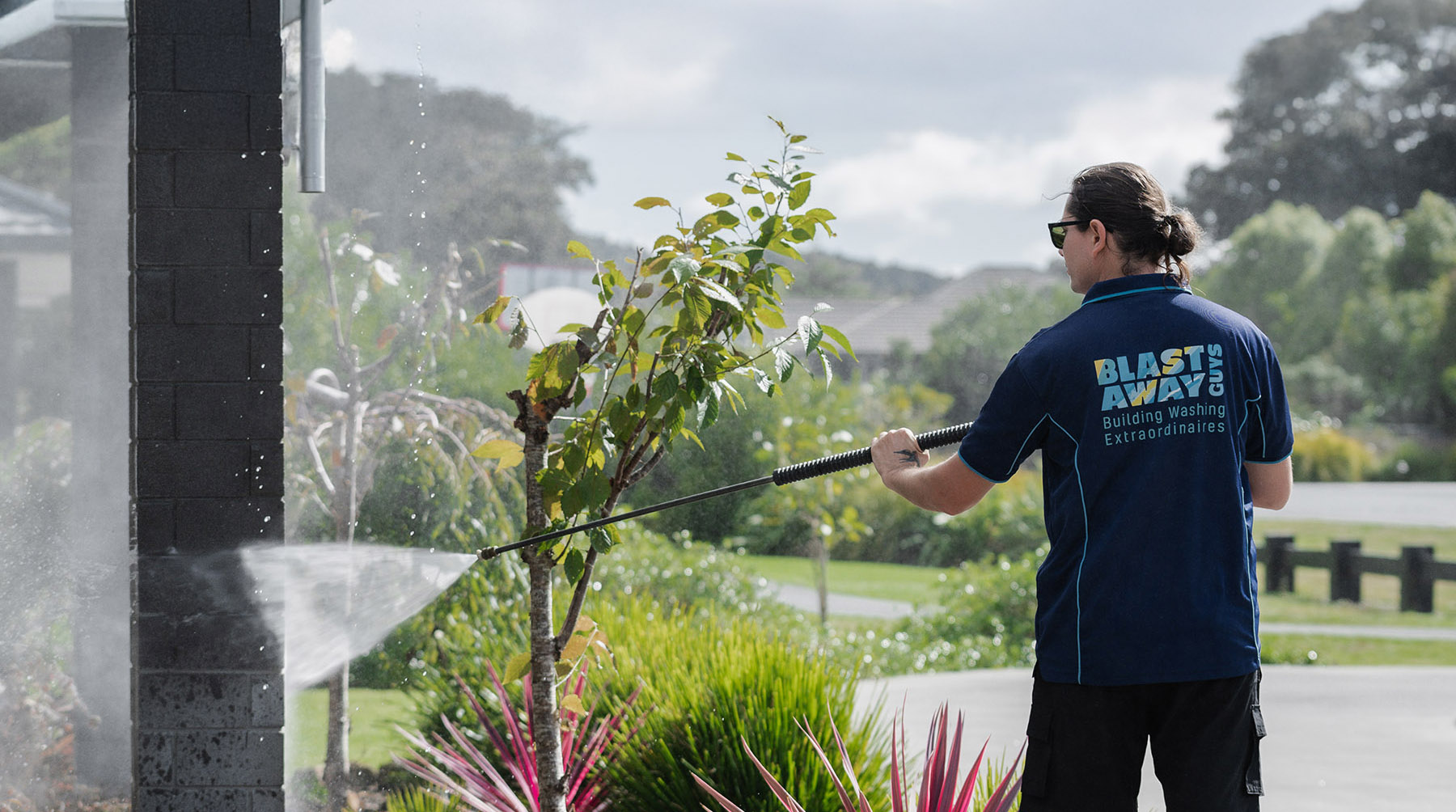
Does moss, mould, and lichen damage your roof in Northland and Auckland?

Does moss, mould, and lichen damage your roof in Northland and Auckland?
Yes. We see the damage all the time.
Moss, mould, and lichen don’t just look bad. They act like a water logged towel draped over your home. They stay soaked long after the rain has gone, pressing dampness into your roofing.
Think of lichen as stealthy acid thieves. It's rhizines (tiny, root-like structures) burrow into the coating, strip away colour and granules, leaving visible scars, and secrete oxalic acid that further degrades the surface.
Mould adds another layer of damage, feeding on organic debris, staining surfaces, and thriving in humidity that accelerates stress on roofing materials.
Moss sends tiny root structures into surfaces, prising up paint and shingle granules like crowbars.

The science is simple. These organisms hold moisture, trigger chemical reactions, and physically disrupt surfaces. All of this accelerates wear.
This is why many manufacturers clearly state that their warranties or guarantees are void if regular washing and protective treatments are not applied.
They know that unchecked growth can shorten the lifespan of paint, coatings, and roofing.
Skip a clean, and you are not just leaving dirt behind. You are leaving a damp, destructive blanket that robs you of the protection you have already paid for.
We see this every week across Northland and Auckland. For us, it is never just about clearing away growth. It is about helping property owners feel happy that their roof is clean and free of moss, mould, and lichen, and confident that it is not quietly causing damage.
Below are brief explanations and common questions people often ask. You may find these helpful.
Curious what our famous roof treatments cost? It’s the solution 97% of our customers choose when it’s time to get their roof clean. See your price today
What happens if you don’t remove moss and lichen from your painted roof?
On painted surfaces, the prolonged dampness weakens the paint’s grip, causing bubbles, cracks, and peeling, and it accelerates chemical breakdown, shaving years off its durability.
Left too long, these failures spread across entire walls or roof sections, forcing costly repainting far earlier than expected.
The good news is that it doesn’t have to get that far; a simple treatment protects your paint, your warranty, and the sense of pride you feel when your home looks well-maintained.
Do lichen, mould and moss damage Colour steel?
On metal roofs such as Colour bond or Colour steel, which rely on protective colour coatings, the moisture creates a rust incubator. It slowly wears away the coating that protects the metal beneath, leaving your investment exposed.
We are upfront about this because it matters: once Colour steel is scarred or rust begins, it cannot be reversed without replacement.
Treatments are about prevention, keeping your roof strong, so you don’t face that kind of expense or stress.
See your roof treatment price before growth causes bigger damage
What happens if you don’t remove moss and lichen from your tiled roof?
On tiled roofs, moss doesn’t just sit there; it actively lifts tiles. By growing beneath the edges, it prises them up and clogs drainage grooves. That allows water beneath the tiles, leading to leaks and unseen damage.
In cold weather, that trapped water freezes and expands inside cracks. Shingles, tiles, or coatings can lift, crack, or peel away.
Leaks don’t just affect tiles; they affect peace of mind. Nobody wants to wonder if the next downpour is seeping into the roof space. Preventing that worry is one of the most significant benefits of a regular treatment. Get your quick roof treatment price and protect your home’s paintwork
Keeping your gutters clear also helps water drain away instead of backing up around the roof.
What happens in cold weather if moss and lichen are left untreated?
When trapped moisture freezes, it expands inside cracks. This expansion forces shingles, tiles, or coatings to lift, crack, or peel away. The result is hidden leaks and faster deterioration.
Is it worth having moss removed from your roof?
Absolutely. Removing moss, mould, and lichen extends the life of your roof, protects coatings, and helps maintain your warranty cover.
Most Northland and Auckland property owners choose a professional roof treatment over a DIY one because it’s safer, longer-lasting, and far more effective.
Blast Away Guys, use a dual-application system that penetrates deep into the moss, mould, and lichen. The first coat opens up the surface while the second gets right down into the roots, helping to slow regrowth. How long the roof stays clear depends on the roofing material, shade, pitch, surrounding vegetation, and local conditions.
Results start showing in just 2–3 months and continue working for up to 12–18 months, giving your roof a fresh, healthy look with out the risk of damage that comes with bleach or high-pressure DIY attempts.
When it is gone, the difference is striking. Many property owners say, “I cannot believe the difference”. Some have even said, “It actually worked. I was dubious, but it worked”
For us, it’s about more than just removing moss. It’s about doing the job properly, applying treatments thoroughly, and leaving you with results that last, the kind of work people remember for the right reasons.
Blast Away Guys is one of the leading roof cleaning specialists in Northland and Auckland.
With 11,237+ jobs completed and a 4.9–5 star Google rating, we are trusted by homeowners, schools, and businesses.
Our dual-application system kills moss, mould, and lichen at the roots and helps slow regrowth, with the reassurance of our Love Clean Guarantee.
Do stronger products always work better? Not necessarily.
Some people believe that a roof treatment product is only effective if it is extremely strong. But the real magic is in how the product is mixed and applied. Even the strongest formula can be watered down too heavily if the equipment does not mix it properly.
On the flip side, a slightly gentler product applied at the correct strength with a professional Venturi system can give a far better result.
We use two different professional grade treatments. One is ideal for roofs with heavy lichen or black mould, and the other is perfect for regular upkeep treatments. Both work extremely well when mixed at the right ratio and applied evenly across the roof.
So instead of focusing on “which product is strongest,” the better question is “is the product being delivered at the correct strength, in the correct way, by someone who knows what they are doing?”
That is what gives you the longest lasting results.
What voids a roof warranty?
Roofing and paint manufacturers know how destructive moss, mould, and lichen can be. That is why many warranties or guarantees clearly state that they will be void if regular washing or treatments are not carried out.
Once moss and lichen start to scar protective coatings, or mould softens paint layers, the surface is no longer performing as it should. If left untreated, the damage is considered neglect rather than a product fault.
Skipping a roof treatment risks more than cosmetic damage. It can also mean losing years of warranty protection and facing costly repainting or reroofing far sooner than expected. Protecting your warranty is really about protecting peace of mind. You keep the coverage you have already paid for, and that always feels good.
This also applies to house washing, because many cladding and paint manufacturers state how often the exterior must be cleaned for the warranty to remain valid.
What is the best time of year to remove moss from a roof?
In Northland and Auckland, autumn, winter and spring are the best seasons for treatments.
Rain helps the product soak in, and cooler conditions reduce regrowth. Spring is also a good time to prepare for the summer sun.
The main point is not to wait until the growth is heavy. Treating early is cheaper, safer, and more effective.
If you’re looking for fast results, a roof wash will transform your roof instantly.
Our soft-wash system clears away built-up moss, mould, and grime, then we apply a treatment to slow regrowth. That second step is one many companies skip, but it’s the key to lasting protection.
Roof washes are also the best option if your roof needs painting, since a clean surface ensures paint adheres properly and lasts longer.
Selling your house: should you get the roof cleaned first?
Yes. A dirty roof covered in moss, mould, or lichen is one of the first things buyers notice. It can give the impression that the home has not been well-maintained, even if the rest of the property is immaculate.
But that does not always mean a roof wash is the best option. A roof treatment can be a smarter choice if you want your roof to look clean without spending extra money on a full wash.
- Short-term selling: If your house is going on the market soon and the roof has visible moss or lichen, a wash can create an instant result.
- Selling in 6–18 months: If you know you will be selling in the next year or two, a treatment is usually better. Treatments are more affordable, gentler on roofing materials, and can take 12–18 months for heavy moss, lichen, or black mould to fully disappear. By the time your property hits the market, the roof will be clean and protected.
To give buyers peace of mind, we also provide a Completion of Works Certificate. This certificate shows the date the roof was treated, the technician who carried out the work, and a description of the treatment and how it works.
Many of our customers give this certificate to their resale state agent or use it as evidence for potential buyers. It reassures them that the roof is being properly looked after, which can remove a barrier to a sale. Get your roof treatment price and boost your home’s street appeal
How much does it cost to remove moss from a roof?
The price depends on the size of the property, whether it is single- or double-level, how steep the pitch is, how easy the access is, how far we need to travel, and how heavy the growth is.
As a ballpark:
- Roof treatment small: around $269
- Roof wash small: a light clean around $460.00, and with heavy growth around $517.00.
- Roof treatment medium 150m2 ish: around $269
- Roof wash medium 150m2 ish: a light clean around $690.00 - $776.25
- Roof treatment medium/large 200 - 230m2 ish: around $349
- Roof wash medium/large 200 - 230m2 ish: a light clean around $920.00 - $1035
These prices are a guide only. Roof treatment prices shown are peak-season rates (September to March). Off-peak pricing from April through August is typically lower, making winter a smart time to book. Roof wash pricing is always quoted individually because each roof is different, pitch, access, growth level, and roof condition all affect the final price.
You can save more by combining services through our Pick 'n' Mix pricing.
We are strong advocates for roof treatments over washes. Treatments are gentler on roofing material and use less water.
Roof washes are harder on your roofing materials and, depending on the materials, can jeopardise protective coatings, take much longer and use a lot more water.
Oh, and as you have seen above, they are more costly. Plus, if only a wash is completed, the mould spores will not be killed, and they can grow back very quickly. We always apply a treatment immediately after washing a roof to ensure it stays clean for a long time.
Older roofs with nails are also prone to leaks after washing. Treatments are safer, last longer, and protect your investment without causing extra strain.
See why 97% of locals choose roof treatments and check your price
Why are moss, mould, and lichen growing on my roof?
Moss, mould, and lichen thrive in damp, shaded conditions. Roofs that sit under trees, face away from the sun, or have low pitches stay wetter for longer. Porous materials like concrete tiles and textured shingles also hold moisture, giving growth something to grip onto.
In Northland and Auckland, with their subtropical climates, these conditions are common. Warm rain, high humidity, and organic debris such as leaves or pollen create the perfect environment. That is why some parts of a roof may show heavy growth while others stay relatively clear.
Another reason these organisms appear is that spores are carried through the air. If a neighbouring roof has moss, mould, or lichen, spores can drift onto your property.
They don’t just land on your roof; they can also settle on cladding, fences, paths, and other exterior surfaces. Once they find moisture, they start to grow.
We have seen this first-hand on a customer's commercial site where lichen spread from a neighbouring roof onto a large gravel surface. The growth became thick and turned dangerously slippery in wet weather.
Examples like this show how easily spores can travel and why regular treatments are so important for keeping all exterior surfaces safe and clean.
How do you stop moss from growing on your roof?
The most reliable way to stop moss, mould, and lichen is with regular roof treatments.
Treatments don’t just kill what is already growing; they also leave a residual effect that slows regrowth.
This is especially important because spores are constantly drifting in from nearby roofs, trees, and other surfaces. Even if you clean your roof once, untreated spores can settle and restart the cycle.
How often you need treatment depends on your roof’s conditions:
1. Sunlight exposure
Shaded roofs, especially those under tall trees or surrounded by buildings, stay damp longer, which encourages moss, mould, and lichen growth. Lighter-coloured roofs, such as white, often show more black lichen buildup. This is partly due to reflected light not generating as much surface heat, which means moisture lingers for longer.
2. Roof pitch
Steeper roof pitches shed water quickly and dry out faster. Roofs with a shallow pitch hold moisture for longer, making them more prone to organic growth and requiring more frequent treatments.
3. Roofing material
Porous materials like concrete tiles or textured asphalt shingles absorb and trap water, creating perfect conditions for moss and lichen to take hold. The more water a surface can hold, the more growth it will attract.
4. Climate and microclimates
In Northland and Auckland’s wet, subtropical conditions, roofs can develop their own mini ecosystems. Damp pockets, shaded sides, and areas where leaves collect can all become high-risk spots that need more attention.
What does treatment frequency look like?
Here’s a guideline to give you an idea of how different roof conditions might affect treatment frequency. Every property is unique, so this should be used only as a reference point.
Roof condition and suggested treatment frequency
· Sunny, steep, dark materials: every 3–4 years.
· Moderate exposure and pitch: every 2–3 years.
· Shaded, low pitch, light or porous materials: every 1–2 years.
If in doubt, treat earlier it’s always cheaper and safer than waiting until grow this heavy
Check your roof treatment price and keep your roof protected for longer
Safety reminder
Climbing onto a roof is dangerous. Moss and lichen make surfaces slippery, and a steep pitch adds more risk. Treatments should be administered by trained technicians using the appropriate equipment.
Can vinegar or bleach kill moss on roofs?
Vinegar can help with light growth by gently altering the surface pH and may slow the spread of mould or algae. But it is not effective on heavy moss or lichen. It often takes multiple applications and may stillfail to reach the deeper root structure of established growth.
Bleach may seem like a quick fix, but it can do more harm than good. Many growths, especially on porous surfaces, have deep roots that bleach cannot reach. More importantly, bleach is mostly water.
Once the active chlorine evaporates, the water left behind can feed the very growth you are trying to eliminate. In some cases, the bleach reaction can even cause mould to release spores, which can spread it faster.
We actually tested four common DIY mould removal methods on different outdoor surfaces, including outdoor furniture fabrics, fences, and concrete, to see what really worked and what completely failed.
The results surprised us, and bleach did not come out on top. If you’d like to see the full breakdown, you can read our blog on removing exterior mould fast. One method completely flopped, one was a stand-out star.
Both bleach and vinegar risk damaging paint, coatings, or roofing materials if misused. They can weaken surfaces, cause discolouration, or dry out protective finishes.
That is why professional-grade treatments are a smarter solution. These products are formulated to penetrate root systems, work with precision, and are applied with specialist equipment that ensures even, safe coverage.
The result is lasting inhibition of regrowth and protection of your roof’s surface, without the side effects of DIY bleach attempts.
Do store-bought products work on heavy lichen?
Sometimes, but often not well. Many hardware products are diluted and need multiple applications. Lichen has deep roots that cheaper products struggle to kill.
This is why treatments from professionals are more effective. They penetrate fully, cover evenly, and save you time and money in the long run.
What is the difference between a roof wash and a roof treatment?
A roof wash is a physical clean using water pressure. It removes dirt, growth, and debris instantly, but it is harder on the roof and can reduce protective lifespan.
A roof treatment is a chemical application that kills moss, mould, and lichen over time. It is gentler, uses less water, and provides a protective effect that slows regrowth.
For most roofs, especially Colour steel, treatments are the smarter choice.
Want to go deeper? Free guides for property owners
We know some property owners want to try it themselves, while others want the peace of mind of a professional. That is why we have created two free guides.
- DIY roof treatment guide: Three things you need to know if you’re considering treating your roof yourself. If you are thinking about doing it yourself, make sure you are comparing apples with apples. Many store-bought products are heavily diluted and may need repeat applications. Our guide explains how to choose the right product strength, apply it effectively, and avoid common mistakes that cost DIYers extra time and money. Send me the DIY guide *******
- Professional roof treatment guide: Why your roof treatment results depend on choosing the right provider. Not all roof treatment companies are created equal. The difference comes down to the equipment, the method, and the product they use. A cheaper system might leave parts of your roof untreated, forcing you to pay for another visit in 12months. Our guide shows you what to look for, why the right approach saves you money, and how to make sure your roof gets the protection it deserves. Send me the professional guide *******
Roof treatment checklist
Use this checklist to spot early signs that it may be time for a roof treat
- Moss, mould, or lichen visible on your roof
- Roof colour looking faded or patchy
- Warranty conditions require regular cleaning
Planning to sell within the next 12–18 months
- Haven’t had a treatment in the last 1–4 years
If any of these apply, it’s worth acting now.
Why Blast Away Guys is one of the best roof treatment specialists in Whangārei, Northland, and Auckland
Blast Away Guys has become one of the most trusted roof treatment teams in Northland and Auckland, having completed 11,237+ jobs across residential, commercial, and educational properties.
At the time of writing this blog, we hold a 4.9–5 star Google rating and dozens of reviews that highlight our professionalism, great communication, and lasting results.
Here’s why property owners choose us:
- Independent and customer-first: We’re locally owned with crews in both Northland and Auckland. Being independent means we’re not bound by franchise rules or cookie-cutter systems. Instead, we set our own standards, guided by what works best for local conditions and customer needs.
- Proven results: 97% of customers choose our roof treatments because they are safe, effective, and long-lasting.
- SiteWise Gold certified: With 7 years of continuous accreditation, we prioritise safety for every property, from family homes to large commercial sites.
- Thorough dual-application system: Our treatment penetrates deep to kill moss, mould, and lichen at the roots, with a second coat where needed to improve coverage and treatment effectiveness.
- Love Clean Guarantee: If you’re not completely satisfied, we come back and fix it free.
- Scale and scope: From small residential properties to sprawling commercial buildings the size of two football fields, we have the equipment, systems, and experience to handle it all.
For us, roof treatments are not just about clearing growth. They are about preventing damage, protecting warranties, and giving property owners peace of mind that their roof is in safe hands.
Conclusion: Protect your roof now
Moss, mould, and lichen are not harmless stains. They trap water, release acids, scar surfaces, and jeopardise warranties. In Northland and Auckland’s damp conditions, growth takes hold fast.
Protecting your roof doesn’t need to be complicated. It starts with one simple step, asking for help from a team that treats your home as if it were their own.
That’s why 97% of our customers choose roof treatments as their go-to solution because they want protection, pride, and peace of mind that lasts.
Join the thousands of property owners across Northland and Auckland who already enjoy that feeling every time they look up at their roof.

